
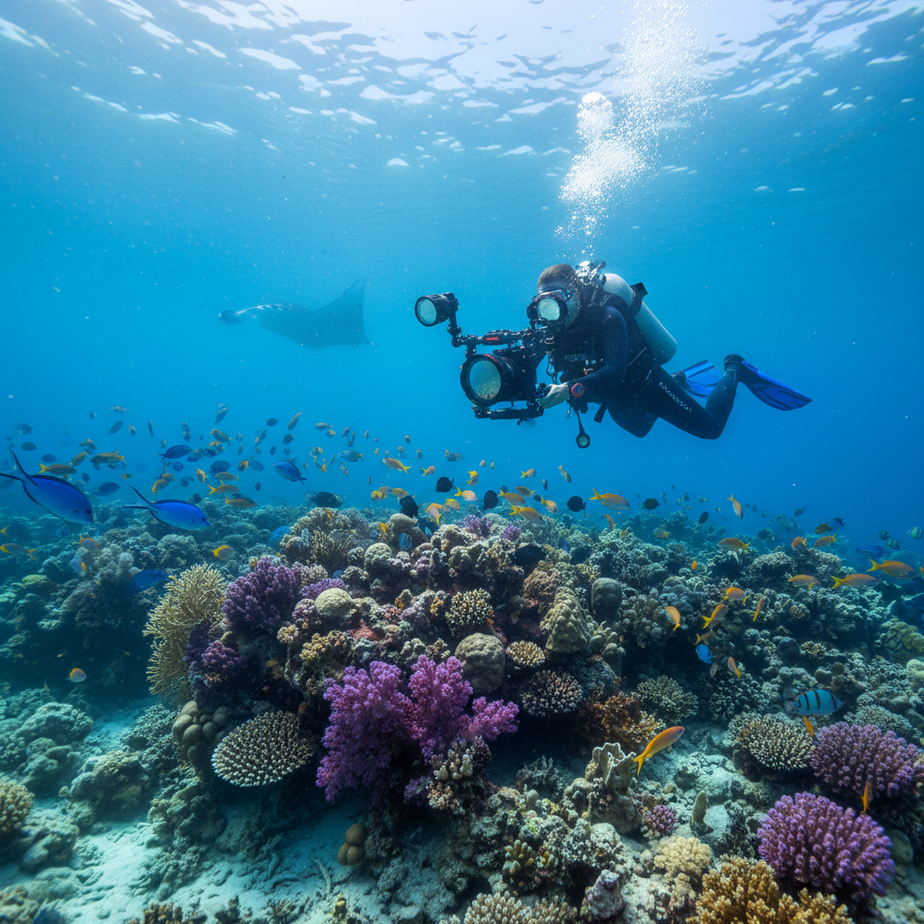
Imagine a world beneath the waves, a kaleidoscope of coral gardens teeming with marine life, bathed in the crystal-clear turquoise embrace of the Red Sea. This isn’t just a dream; it’s a daily reality in Hurghada, Egypt – truly one of the top global destinations for aquatic adventures in 2026. For those of us who live and breathe the Red Sea, there’s an irresistible urge to capture its unparalleled beauty. But how do you translate that awe-inspiring underwater spectacle into photographs that truly do it justice?
As your local expert and passionate advocate for Hurghada’s wonders, I’m here to share the ultimate Red Sea photography tips. Whether you’re a seasoned diver with a professional setup or a curious snorkeler with a compact camera, these insights will elevate your reef photos from simple snapshots to stunning visual stories. Get ready to master underwater photography tips and immortalize the magic of Hurghada’s reefs!
Gearing Up for Greatness: Your Essential Underwater Kit
Before you even dip a toe in the water, having the right equipment is paramount. The Red Sea’s clarity is legendary, but light behaves differently underwater. Understanding your gear is the first step to incredible reef photos.
Camera Choices: From Pro DSLRs to Your Reliable GoPro Hurghada
The beauty of modern technology means there’s a camera for every budget and skill level:
- Compact Underwater Cameras: Brands like Olympus Tough or Sealife offer waterproof, point-and-shoot simplicity. Great for snorkelers or beginners looking for robust performance without a housing.
- Mirrorless/DSLR with Housing: For serious enthusiasts and professionals, a mirrorless or DSLR camera with a dedicated underwater housing (e.g., from Ikelite, Nauticam, or Sea & Sea) offers unparalleled image quality and manual control. This setup allows for interchangeable lenses, letting you choose between wide-angle for expansive reefscapes or macro for tiny creatures.
- The Ever-Popular GoPro Hurghada: You can’t talk about underwater photography tips without mentioning the GoPro. It’s the go-to for many adventurers, especially in Hurghada. Models like the GoPro Hero 10, 11, or 12 offer incredible video and still capabilities, are natively waterproof (to a certain depth), and incredibly versatile. Their wide-angle lens is perfect for capturing large coral formations and schools of fish. For deeper dives beyond its native limit, investing in a sturdy housing is recommended.
Essential Accessories & Local Tips for Hurghada Divers
A camera alone isn’t enough. These accessories are game-changers:
- Red/Magenta Filters: Absolutely critical for color correction. As you descend, red light is absorbed by the water, leaving everything looking blue-green. A red filter (for blue water) or magenta filter (for green water) brings back those vibrant reds, oranges, and yellows that make the Red Sea so famous. For shallow snorkeling, sometimes even a simple red lens on your GoPro Hurghada can make a significant difference.
- Underwater Lights/Strobes: Natural light diminishes quickly. Strobes (flashes) or continuous video lights restore true colors and add dramatic depth and contrast to your subjects. This is particularly important for macro photography or when shooting in deeper waters.
- Dome Port: Essential for stunning over-under or split shots, allowing you to capture both above and below the waterline in a single frame. Perfect for those iconic Hurghada beach-to-reef shots!
- Floatation Straps: A lifesaver! Losing your camera to the depths of the Red Sea is a nightmare.
- Extra Batteries & Memory Cards: Long days on Hurghada dive boats mean extended opportunities. Don’t miss a shot because of a dead battery or full card.
- Anti-Fog Inserts: Humidity can cause condensation inside housings. These small packets prevent fogging, ensuring clear shots.
Mastering the Art of Underwater Photography: Techniques from a Local Expert
Even with the best gear, understanding the principles of underwater photography tips is what truly transforms your images. Here’s how to capture those incredible reef photos.
Lighting & Composition: Bringing Your Reef Photos to Life
The underwater environment presents unique challenges and opportunities:
- Get Close, Get Closer! This is perhaps the most important rule. Water scatters light and particles, reducing clarity the further you are from your subject. Minimize the amount of water between your lens and what you’re shooting for sharper, more vibrant images. Aim to be within 1-2 feet for macro, and no more than 3-5 feet for wide-angle.
- Shoot Upwards: Whenever possible, try to shoot slightly upwards, aiming towards the surface. This utilizes the natural sunlight, provides a clean blue background, and helps separate your subject from the reef.
- Mind the Sun: For optimal natural light, shoot with the sun behind you or to your side. Avoid shooting directly into the sun unless you’re aiming for a dramatic silhouette. Mid-morning to early afternoon (around 10 AM to 2 PM) often provides the best natural light conditions.
- Buoyancy is Key: Good buoyancy control isn’t just for safety; it’s essential for stable shots. Practice hovering motionless to avoid blurry images and, more importantly, to protect the delicate coral reefs. Never touch the reef for stability.
- Composition Rules Still Apply: The rule of thirds, leading lines (think coral formations or a school of fish), and negative space are just as effective underwater. Look for interesting patterns, textures, and interactions.
Settings & Post-Processing: Elevating Your Underwater Shots
Knowing your camera’s settings and basic editing can make a world of difference:
- White Balance: Manual white balance is your best friend. If your camera allows it, set a custom white balance by pointing at a white or grey slate at your shooting depth. This drastically improves color accuracy. If not, rely on your red filter and adjust in post-processing.
- ISO: Keep your ISO as low as possible (e.g., ISO 100-400) to minimize digital noise, especially in low-light conditions.
- Shutter Speed: For fast-moving fish, you’ll need a faster shutter speed (e.g., 1/125s or faster). For static coral, you can go slower, but ensure your buoyancy is perfect.
- Aperture: Controls depth of field. Use a wider aperture (smaller f-number) for a blurry background (great for portraits of marine life) and a narrower aperture (larger f-number) for sharp focus on an entire reef scene.
- Shoot RAW: If your camera permits, always shoot in RAW format. This captures much more image data, giving you far greater flexibility to correct colors, exposure, and white balance in post-processing without losing quality. This is invaluable for salvaging seemingly ‘blue’ images.
- Basic Post-Processing: Even simple adjustments can transform your reef photos. Focus on correcting white balance, boosting contrast, increasing saturation slightly, and sharpening. Software like Adobe Lightroom or even free phone apps can help.
Hurghada’s Photo Hotspots: Best Reefs for Your Lens
Now that you’re armed with gear and techniques, where in Hurghada should you point your lens? As a local, I’ve seen countless incredible spots, but some truly stand out for stunning reef photos and marine encounters:
- Giftun Island & Its Satellite Reefs (Mahmya, Orange Bay): Perfect for snorkelers and beginner divers. The shallow, vibrant coral gardens around these famous islands are teeming with colorful fish, making it easy to capture stunning reef photos with a GoPro Hurghada or compact camera. Look for clownfish in anemones and schools of fusiliers.
- El Fanadir & Abu Ramada: These are classic Hurghada dive sites known for their healthy, extensive reef walls and pinnacles. You’ll encounter moray eels, blue-spotted rays, and diverse hard and soft corals. The clarity here is consistently excellent.
- Shaab El Erg (Dolphin House): While famous for its resident spinner dolphins, the reefs around Shaab El Erg are also spectacular. Keep your camera ready for wide-angle shots of large coral formations and schools of bannerfish. If you’re lucky enough to capture the dolphins, remember to give them space!
- Small Giftun: Deeper walls here offer incredible opportunities for wide-angle photography of gorgonian forests and impressive reefscapes. Advanced divers will find plenty to explore and capture.
- Abu Nuhas (Shipwreck Alley): For the experienced diver, the wrecks of Abu Nuhas offer a unique photographic challenge. Capturing the eerie beauty of wrecks adorned with marine life requires good lighting and often a wide-angle lens.
Remember, the golden rule of underwater photography in Hurghada is always: take nothing but pictures, leave nothing but bubbles. Preserve the pristine environment for future generations and photographers.
Your Red Sea Photography Journey Awaits!
The Red Sea’s underwater world is a masterpiece, and with these underwater photography tips, you’re now equipped to capture its magic. From the versatility of your GoPro Hurghada to advanced camera techniques, the opportunity to create breathtaking reef photos is within your grasp. Imagine showcasing your vibrant shots of Hurghada’s coral gardens and exotic marine life to friends and family – a testament to an unforgettable adventure.
Ready to dive in and capture your own Red Sea masterpiece? HurghadaTrips.com is your gateway to incredible underwater excursions. Explore our curated trips, diving packages, and snorkeling adventures specifically designed to put you face-to-face with Hurghada’s legendary reefs. Let us help you plan your unforgettable 2026 Hurghada adventure and make your reef photos truly spectacular!